
Lessons (13 of 16)
Offering Good, Better, and Best Options
Instead of handing a homeowner one number and waiting for a yes or no, you can hand them three well-built options and let them tell you their budget by choosing. This lesson walks through how to build Good, Better, and Best tiers from a single hall bathroom scope, and why that structure wins more jobs at better margins than a single bid ever will.
Why Tiered Pricing Wins Jobs
When you give a homeowner a single number, you're guessing at their budget and their taste at the same time. Guess too high and they walk. Guess too low and you leave money on the table or you undersell a scope that was never going to satisfy them once the tile samples showed up. A single bid also turns the conversation into a yes/no decision, which invites them to shop it against other contractors on price alone. Tiered pricing flips that. You present three versions of the same job, built on the same trip, the same crew, and the same demo and rough-in work, and let the homeowner self-select based on what they can afford and what they want. Most will not pick the cheapest option once they see what Better includes, because the jump in value is usually bigger than the jump in price. That's not a trick, it's just how the tiers should be built: the labor-heavy infrastructure (demo, plumbing rough-in, electrical, waterproofing) is shared across all three, so the price delta between tiers is mostly materials and finish-level labor, not a second full job. This also keeps the conversation about scope instead of about whether you're 'too expensive.' If a homeowner says Best is out of their range, you're not losing the job, you're pointing them to Good or Better. You stay in the conversation instead of getting a flat no. Tiered proposals also protect your margin. Because you're not trying to cram every possible upgrade into one number to avoid 'losing' a feature, you're not pricing defensively low to win the bid. Each tier is priced to be profitable on its own, so no matter which one they pick, you're covered.
What Actually Changes Between Tiers
For a typical hall bathroom remodel (roughly 5x8 to 5x10 feet, one tub/shower, one vanity, toilet, flooring), the three tiers commonly differ in these categories: shower/tub surround, vanity and countertop, flooring, fixtures, and labor hours tied to installing the upgraded materials. What stays constant across all three tiers is the demo, rough plumbing, rough electrical, drywall or cement board, and waterproofing. That shared base is a large share of the cost of the lower tiers (in the example below, nearly two thirds of Good and under a third of Best), which is why the tiers step up in price instead of multiplying. Good tier: standard one-piece or three-piece fiberglass or acrylic tub-shower surround, stock 30 or 36-inch vanity from a big box supplier, sheet vinyl or basic ceramic tile flooring, builder-grade chrome fixtures. Better tier: tiled shower walls (ceramic or porcelain, standard layout, no niche or bench), semi-custom vanity with upgraded countertop (quartz instead of laminate), porcelain tile flooring, mid-grade brushed nickel or matte black fixtures. Best tier: curbless or low-curb shower pan with a linear drain, full tile surround with a built-in niche and bench, frameless glass enclosure, custom or semi-custom vanity with furniture-style details, heated floor, designer fixtures. Each step up usually adds both material cost and labor hours, since tile work, custom pans, and glass installs take longer than a one-piece surround. Price the labor difference honestly. Don't just mark up materials and call it a tier.
How to Present the Tiers
Present all three tiers on one page or one document, side by side, not as three separate bids mailed separately. Use the same format for each: a short description, a bullet list of what's included, and a total price. Don't itemize every line item differently across tiers at this stage. Save the full line-item breakdown for the tier they choose. At the proposal stage, you want them comparing packages, not auditing every number. Label them Good, Better, Best or use names tied to the scope, like 'Standard Refresh,' 'Upgraded Remodel,' 'Premium Remodel.' Avoid cute names that obscure what's actually different. Walk them through the shared base first: 'All three options include full demo, new plumbing rough-in, new electrical, and waterproofing, that's the same no matter which you pick.' Then walk up the tiers so they see the logic of what's changing and why the price moves. This framing matters, because it shows the price increase is tied to visible, tangible upgrades, not padding. End by asking which direction feels right, not which one they want to buy. That keeps it a conversation instead of a close.
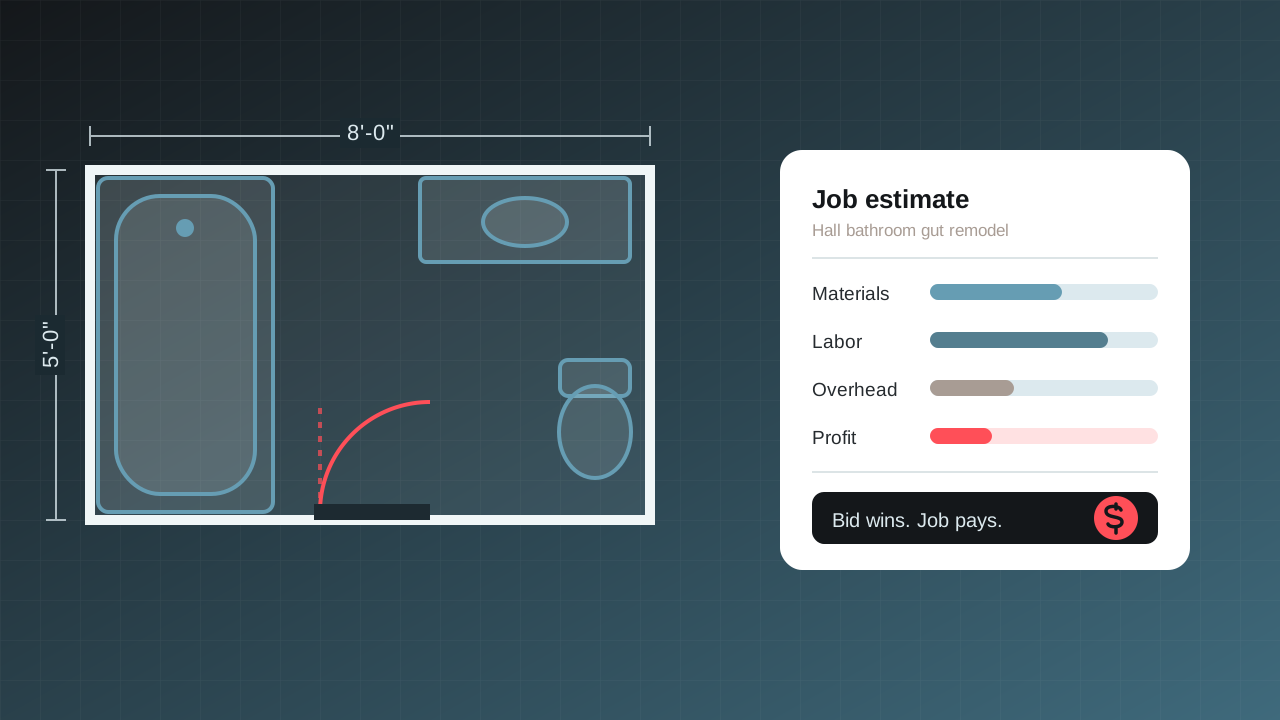
Scenario: A homeowner wants to remodel a 5x8 hall bathroom: existing tub/shower combo, pedestal sink, toilet, and vinyl flooring, all original to the house. They want a full remodel but haven't said a budget out loud.
Step 1: Scope the shared base. Full demo of tub, sink, toilet, and flooring. New plumbing rough-in for a relocated vanity drain. New GFCI circuit and exhaust fan. Cement board and waterproofing membrane in the wet area. Say this comes to $6,200 in labor and materials across all three tiers. Step 2: Build Good. Add a 60-inch three-piece acrylic tub-shower surround ($900 materials, $800 labor), a 30-inch stock vanity with laminate top ($450 materials, $350 labor), sheet vinyl flooring ($300 materials, $400 labor), and builder-grade chrome fixtures ($250). Good tier total: $6,200 + $3,450 = $9,650. Step 3: Build Better. Swap the surround for tiled shower walls, porcelain, standard pattern ($1,400 materials, $1,800 labor for the extra tile time). Upgrade the vanity to a 36-inch semi-custom unit with quartz top ($1,100 materials, $450 labor). Upgrade flooring to porcelain tile ($700 materials, $900 labor). Mid-grade brushed nickel fixtures ($450). Better tier total: $6,200 + $6,800 = roughly $13,000. Step 4: Build Best. Curbless shower pan with linear drain ($1,600 materials, $2,200 labor), full tile surround with niche and bench ($2,200 materials, $2,600 labor), frameless glass enclosure ($1,800 installed), 36-inch custom vanity with furniture details ($2,000 materials, $600 labor), heated floor under porcelain tile ($1,200 materials and install added to the $1,600 flooring already priced), designer fixtures ($750). Best tier total: $6,200 + $16,550 = $22,750. Step 5: Present. Good $9,650, Better $13,000, Best $22,750. Notice the jump from Good to Better is about $3,350, driven mainly by tile labor and the vanity upgrade. The jump from Better to Best is about $9,750, driven by the curbless pan, glass, and heated floor, all labor-intensive items. Walk the homeowner through what's shared, then what changes, and let them land where their budget and taste intersect.
Key takeaways
- •Tiered pricing turns a yes/no decision into a self-selection process, which keeps you in the conversation even if the homeowner can't afford your top tier.
- •Build all three tiers from the same shared base (demo, rough-in, waterproofing) so you're not re-estimating a new job three times, only pricing the finish-level differences.
- •Price each tier to be profitable on its own. Don't lowball Good hoping to upsell, since some homeowners will take it as presented.
- •The price delta between tiers should reflect real differences in material grade and labor hours, especially tile work, custom pans, and glass, not arbitrary markup.
- •Present all three tiers side by side in one document and walk through the logic from shared base to upgrades, rather than mailing three separate competing bids.