
Lecciones (3 de 16)
Asking About Budget and Priorities Before Pricing
Before you measure a single wall or price a single tile, you need five minutes of conversation with the owner about money and priorities. Skip it, and you can build a perfectly accurate estimate that still gets rejected because it solved a problem the owner didn't actually have.
Why a Correct Bid Can Still Be the Wrong Bid
A bid can be mathematically sound, properly marked up, and fully defensible on labor and material costs, and still lose the job. This happens when the contractor prices the remodel they assumed the owner wanted instead of the one the owner is actually trying to buy. An owner flipping a rental property and an owner renovating their forever home can point at the exact same gutted hall bathroom and want completely different outcomes. One wants the cheapest finish that passes inspection and looks clean in photos. The other wants a bathroom that still looks good in fifteen years. If you build your estimate before you know which owner you're talking to, you're guessing, and guessing shows up as either a bid that's too expensive for what the owner wanted (rejected as overpriced) or too cheap for what they expected (rejected once they realize the fixtures are builder-grade). Both outcomes are avoidable. The fix isn't a better pricing formula, it's a short conversation that happens before the formula gets applied. Most owners haven't fully articulated their own priorities until you ask directly, so this conversation also helps them, it's not just information gathering for your benefit. Think of it as the step that determines which of three or four possible versions of the job you're actually going to price. Only after you know that does line-item estimating become useful work instead of a guess dressed up in a spreadsheet.
The Core Questions to Ask Before Building Numbers
Ask these in a normal conversational order, not as an interrogation. First, overall budget range: "Do you have a number in mind for this project, even a rough range?" Some owners won't answer directly, but most will give you something like "under $15,000" or "I've seen quotes from $8,000 to $20,000 and I don't know what's realistic," which is itself useful. Second, must-haves versus nice-to-haves: "Is there anything you already know you want, like a walk-in shower or heated floors, and anything you're flexible on?" This separates fixed scope from negotiable scope early. Third, and most important for pricing strategy, ask directly whether they're optimizing for lowest upfront cost or long-term durability: "Are you trying to do this as cheaply as possible, or are you planning to be in this house a long time and want it built to last?" Fourth, ask about timeline pressure, since a rush job (commonly a premium of 10 to 20 percent on labor) changes the math too. Fifth, ask who else is deciding: is a spouse, partner, or property manager going to review this bid, since that affects how much detail and justification the written bid needs. These five questions typically take under ten minutes and should happen at the first walkthrough, before you take a single measurement for pricing purposes.
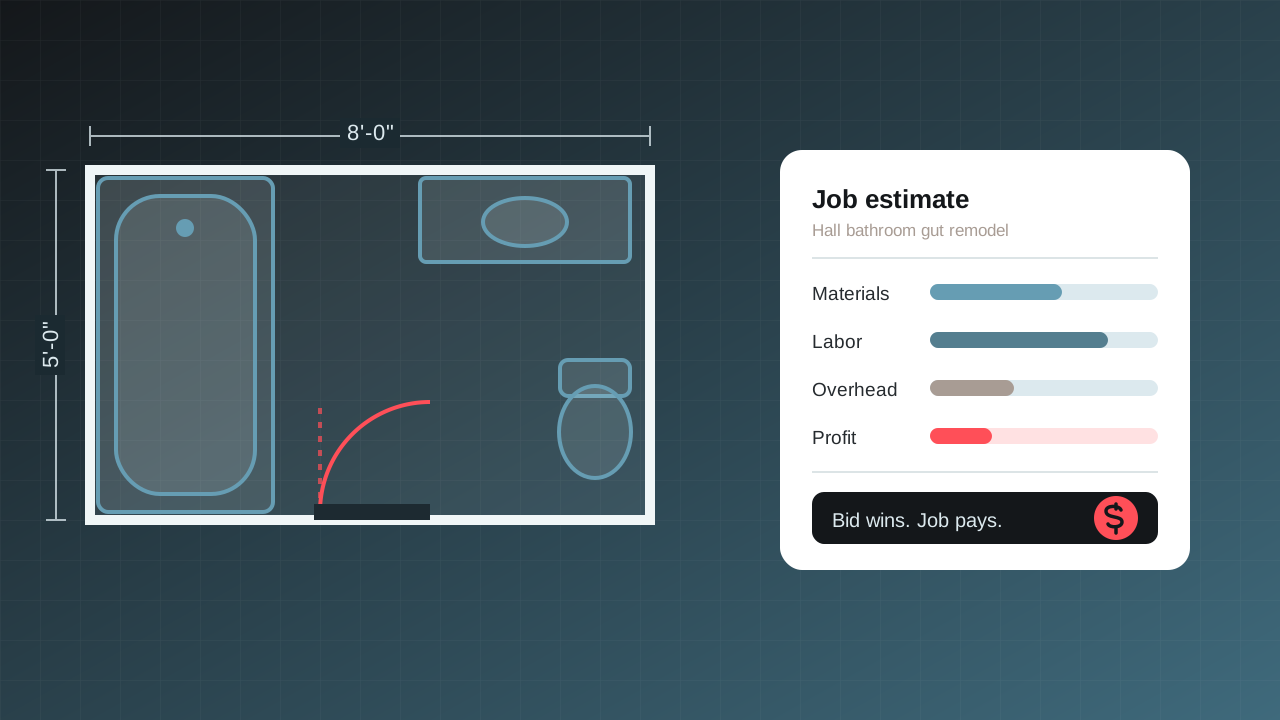
Escenario: A hall bathroom gut remodel, roughly 5x8 feet, tub-to-shower conversion, new vanity, new flooring, new toilet. Same physical scope, three different owners with three different answers to the budget and priorities questions.
Owner A is a landlord refreshing a rental unit between tenants. Budget range given: $6,000 to $8,000. Must-have: it needs to pass inspection and look clean in listing photos. Priority: lowest cost, this bathroom needs to survive renters, not decades. Pricing approach: a one-piece fiberglass tub/shower insert (commonly $800 to $1,500 installed) instead of tiled shower walls, a stock laminate-top vanity (commonly $300 to $600), sheet vinyl or vinyl plank flooring instead of tile, builder-grade fixtures. Estimated total: around $7,200. Owner B is a family planning to stay in the house 10+ years but watching their budget. Budget range given: $12,000 to $15,000. Must-have: a real tiled shower, not fiberglass. Priority: durability on the big-ticket items, savings on finishes nobody will notice later. Pricing approach: tiled shower walls with a quality waterproofing membrane (commonly $3,500 to $5,500 for labor and materials combined), a mid-grade solid-surface vanity top, ceramic tile flooring, mid-tier fixtures. Estimated total: around $13,800. Owner C is renovating their forever home and has already mentioned aging-in-place concerns. Budget range given: "whatever it costs to do it right, within reason." Must-haves: curbless walk-in shower, grab bar blocking, slip-resistant tile. Priority: built to last 20+ years, resale value secondary. Pricing approach: curbless shower pan system (commonly $2,000 to $3,000 more than a standard pan due to subfloor modification), porcelain tile throughout, solid wood vanity, upgraded ventilation. Estimated total: around $21,500. Same square footage, same basic scope description, three bids that differ by more than $14,000, and all three are correct for the owner who receives them.
Ideas clave
- •Ask about budget range, must-haves versus nice-to-haves, and cost-versus-durability priority before building any line items, not after.
- •A technically accurate bid can still be rejected if it doesn't match what the owner was actually optimizing for.
- •The same physical scope of work can legitimately produce bids that differ by thousands of dollars depending on material tier and finish quality the owner actually wants.
- •Timeline pressure and decision-maker involvement (a spouse or partner reviewing the bid later) are worth asking about upfront since they affect both pricing and how much detail the written bid needs.
- •This conversation typically takes under ten minutes at the first walkthrough and should happen before measurements are used for pricing purposes.